

 By
By 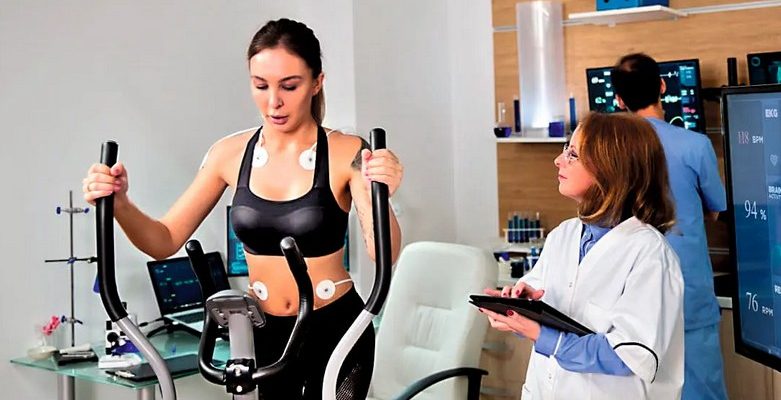
The pursuit of peak athletic performance has transitioned from the realm of sheer grit and intuition into a precise science dominated by biomechanical analysis. At its core, biomechanics is the study of the mechanical laws relating to the movement or structure of living organisms. For the elite athlete, this means dissecting every stride, swing, and jump to understand how internal muscular forces interact with external forces like gravity and ground reaction. By optimizing these interactions, athletes can achieve the ultimate goal: the generation of peak power. Power, defined as the product of force and velocity, is the differentiator between a good athlete and a record-breaker. Understanding the nuances of human movement through a mechanical lens allows for the fine-tuning of technique to push the boundaries of what is humanly possible.
The Foundation of Force Production
The generation of power begins with the ability to produce force. In biomechanics, this is often analyzed through the lens of Newtons laws of motion. To move the body or an external object rapidly, an athlete must exert a force greater than the resistance of that object. However, simply being strong is not enough. The efficiency of force production is determined by the alignment of the musculoskeletal system.
Leverage plays a critical role in this process. The human body is a system of levers where bones act as the lever arms and joints act as the fulcrums. The distance between the joint and the point of muscle attachment, known as the moment arm, dictates the mechanical advantage. Biomechanical analysis helps coaches identify whether an athlete is operating at a mechanical disadvantage. For example, in a sprint start, the angle of the shin and the position of the hips determine how much of the muscular force produced by the glutes and quadriceps is converted into horizontal propulsion versus vertical lift.
The Velocity Component and the Force-Velocity Curve
While force is half of the power equation, velocity is the other. The relationship between these two variables is inverse, a concept known as the force-velocity curve. When a muscle is required to contract at maximum velocity, it can produce very little force. Conversely, at maximum force production, velocity is at its lowest.
Maximizing peak power requires training at the sweet spot of this curve. Biomechanical testing, often utilizing linear position transducers or wearable accelerometers, allows sports scientists to plot an athletes unique profile. If an athlete is force-deficient, their training will focus on heavy resistance to shift the bottom of the curve. If they are velocity-deficient, the focus shifts to plyometrics and light-load explosive movements. The goal is to move the entire curve upward and to the right, enabling the athlete to produce more force at higher speeds.
The Stretch-Shortening Cycle and Elastic Energy
One of the most profound biological mechanisms for maximizing power is the Stretch-Shortening Cycle (SSC). The SSC describes an active stretch of a muscle (eccentric phase) followed immediately by a rapid shortening of that same muscle (concentric phase). Think of a basketball player dipping their hips before jumping for a dunk.
During the eccentric phase, the muscles and tendons store elastic energy, much like a stretched rubber band. If the transition between the stretch and the contraction—known as the amortization phase—is sufficiently fast, this stored energy is added to the force of the subsequent contraction. Biomechanical analysis focuses heavily on minimizing the duration of the amortization phase. Using high-speed cameras and force plates, analysts can determine if an athlete is leaking energy during this transition. A slow amortization phase results in the dissipation of elastic energy as heat, forcing the muscles to rely solely on voluntary contraction, which is far less powerful.
Kinetic Linking and the Summation of Forces
Peak athletic power is rarely the result of a single muscle group. Instead, it is the product of a kinetic chain. This is the notion that force is generated from the ground up and transferred through segments of the body to the terminal point, such as the hand in a baseball pitch or the foot in a soccer kick.
The summation of forces requires precise timing and coordination. In a golf swing, power starts with the ground reaction force of the feet, moves through the rotation of the hips, into the torso, through the shoulders, and finally down the arms into the clubhead. Biomechanical analysis uses 3D motion capture to track the sequential acceleration of these body segments. If one segment in the chain fires too early or too late, the kinetic energy is lost, and the peak power at the end of the chain is diminished. This is often referred to as a mechanical break in the kinetic chain. Identifying these breaks allows for highly specific technical corrections that yield immediate improvements in output without requiring additional muscle mass.
Ground Reaction Force and Impulse
In almost every sport, the ground is the primary source of power. According to the law of action and reaction, the force an athlete pushes into the ground is returned in equal measure. This is known as the Ground Reaction Force (GRF). However, in biomechanics, we are also concerned with impulse, which is force multiplied by time.
To maximize power, an athlete must produce a high amount of force in an extremely short window of time. For a high jumper, the time spent on the ground during the final takeoff step is mere milliseconds. Biomechanical analysis using dual-axis force plates measures how an athlete distributes their weight and the direction of the force vector. If the vector is directed too far forward or backward, the power is misdirected, resulting in a loss of vertical height. Elite training involves teaching the nervous system to recruit motor units more rapidly, a process known as increasing the Rate of Force Development (RFD).
The Role of Joint Stiffness and Stability
A common misconception is that flexibility is always beneficial for power. In reality, biomechanics teaches us that certain joints require a high degree of stiffness to maximize power. This is particularly true for the ankle during running and jumping. A stiff ankle acts like a rigid lever, allowing for the efficient transfer of force from the leg to the ground. If the ankle is too compliant, or soft, it collapses under the load, and the energy generated by the powerful leg muscles is absorbed rather than reflected into the ground.
Stability in the core is equally important. The torso serves as the bridge between the lower and upper body. If the core lacks stability, it acts like a wet noodle, failing to transfer the force generated by the legs to the upper extremities. Biomechanical analysis often utilizes electromyography (EMG) to ensure that the stabilizing muscles are firing correctly to create a rigid platform for power transfer.
Technological Advancements in Analysis
The tools available for biomechanical analysis have evolved significantly. In the past, this was limited to controlled laboratory settings. Today, wearable technology and mobile high-speed video allow for analysis in the field.
-
3D Optical Motion Capture: Using infrared cameras to track reflective markers on an athletes body to create a precise digital skeleton.
-
Force Plates: Measuring the magnitude and direction of the force an athlete exerts on the ground.
-
Wearable IMUs (Inertial Measurement Units): Measuring acceleration and angular velocity in real-time during competition.
-
Computational Fluid Dynamics (CFD): Used in sports like cycling and swimming to analyze how body position affects drag and power efficiency.
These technologies provide an objective baseline, removing the guesswork from coaching. They allow for the identification of subtle asymmetries that may not be visible to the naked eye but could lead to injury or decreased performance over time.
Conclusion: The Integration of Science and Sport
Biomechanical analysis is the bridge between human potential and physical reality. By understanding the mechanical principles of leverage, the force-velocity relationship, and the kinetic chain, athletes can refine their movements to reach peak power. It is no longer enough to simply work harder; one must work more efficiently. As technology continues to advance, the resolution of our understanding of human movement will only sharpen, further closing the gap between the current limits of performance and the next generation of athletic records.
http://googleusercontent.com/image_collection/image_retrieval/11659922595868923603_5
Frequently Asked Questions
How does body proportions or limb length affect an athletes power potential?
Limb length significantly impacts mechanical leverage. For example, shorter limbs generally provide a better mechanical advantage for force production, which is why many elite weightlifters have relatively short arms and legs. Conversely, longer limbs can create higher tip speeds in movements like a tennis serve or a baseball pitch due to the longer lever arm, though they require more muscular force to move at the same angular velocity.
Can biomechanical analysis help in preventing injuries during power movements?
Absolutely. Many injuries occur because of poor mechanics or load distribution. By analyzing an athletes movement patterns, biomechanists can identify “red flags,” such as knee valgus (collapsing inward) during a jump landing or excessive lumbar extension during a lift. Correcting these mechanical flaws reduces the stress on connective tissues and bones.
What is the difference between strength and power in a biomechanical context?
Strength is the maximal amount of force a muscle can produce regardless of time. Power is the ability to produce that force quickly. A powerlifter may be incredibly strong because they can move a massive weight, but a shot putter is more powerful because they move a significant weight at a very high velocity.
Is there a limit to how much power a human can produce?
Biological limits are determined by muscle fiber type (fast-twitch vs. slow-twitch), neural drive, and the structural integrity of tendons. While we continue to push these limits through better training and recovery, there is an eventual ceiling where the force produced by the muscles would exceed the breaking strength of the bones and tendons.
How does fatigue change an athletes biomechanics during a game?
Fatigue often leads to a breakdown in the kinetic chain. As primary power-producing muscles tire, the body compensates by recruiting secondary muscles that are less efficient. This often leads to “shorter” movements, a decrease in joint stiffness, and a significant drop in Rate of Force Development, making the athlete appear less explosive.
Does age significantly impact the biomechanical efficiency of power production?
Age primarily affects power through the loss of fast-twitch muscle fibers and a decrease in tendon stiffness. However, biomechanical efficiency—the technique of movement—can often be maintained or even improved with age, helping older athletes compensate for some of the physiological declines in raw muscle output.
What role does footwear play in biomechanical power transfer?
Footwear acts as the interface between the athlete and the ground. For power sports, shoes are designed to provide a stable base and minimize energy loss. Weightlifting shoes have a hard, non-compressible sole to ensure all force is directed into the ground, while sprinting spikes are designed to maximize traction and maintain ankle stiffness.









Comments